Fragmented workflow
Planning, publishing, measurement and client communication lived in separate systems.
Social Intelligence
A central workspace for boutique agencies and independent social teams to connect performance, planning and creative decisions across multiple clients.
01 · The challenge
Planning, publishing, measurement and client communication lived in separate systems.
Performance data explained what happened, but rarely clarified what the team should create next.
Teams needed a faster way to connect creative decisions with results clients could understand.
I led the end-to-end design process, speaking with agency social media professionals, mapping their workflow and turning repeated friction into testable product ideas.
02 · Research
03 · Synthesis
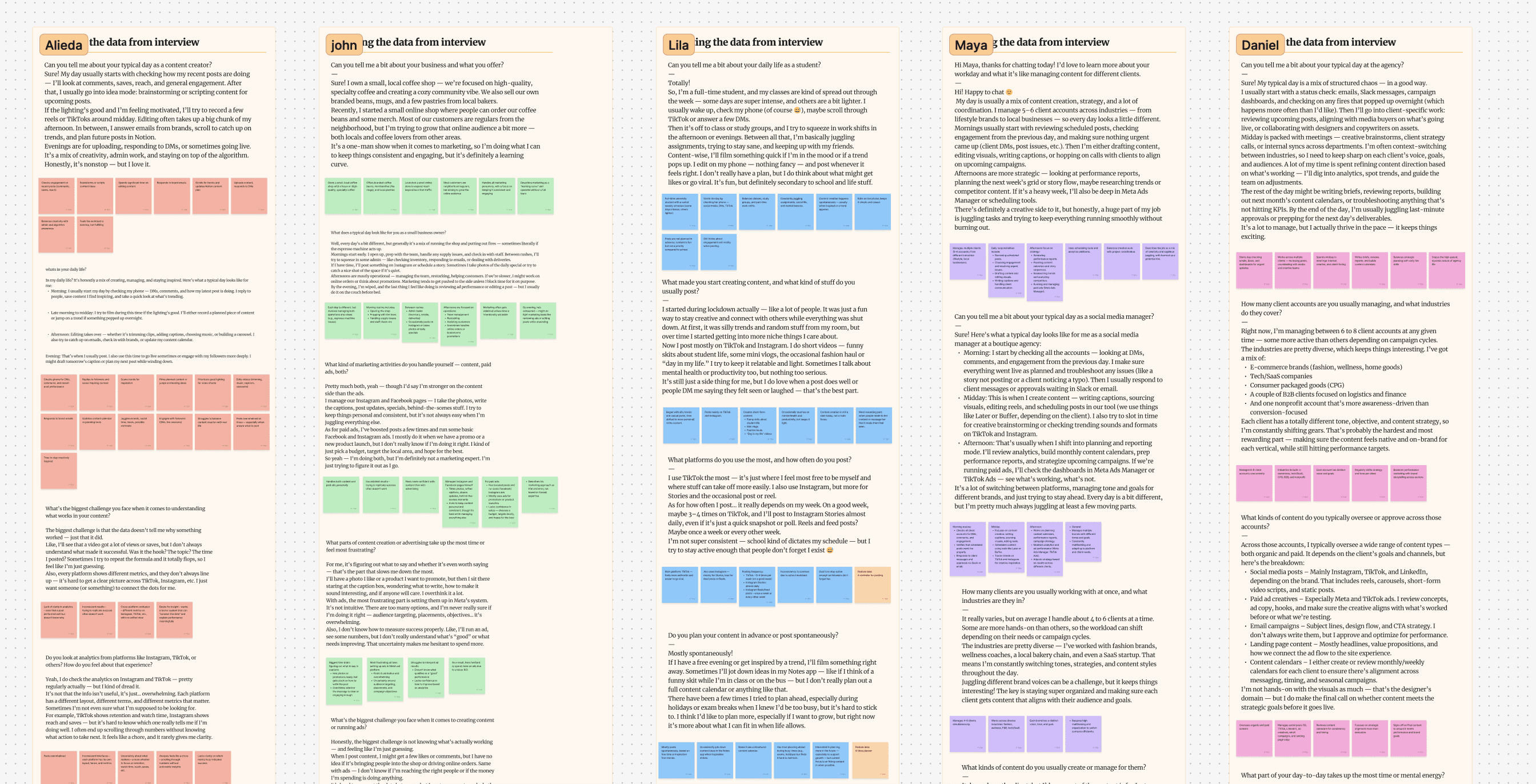
Switching between platforms, accounts and brand voices drained attention before creative work even began.
Participants relied on four to seven tools each day, creating duplicated work and lost context.
Teams had numbers but lacked a fast explanation of why a post performed well or poorly.
Briefs were written without a strategic anchor, leading to more revisions and slower delivery.
Managers needed a clearer way to connect content choices with results and ROI.
Existing tools made it difficult to understand market patterns and find a differentiated direction.
04 · Framing the opportunity
Bring the signal, explanation and next move into one connected flow.
Use client, brand voice and performance context instead of generic suggestions.
Attach briefs, feedback and approvals to the work rather than another communication channel.
05 · Ideation and flow
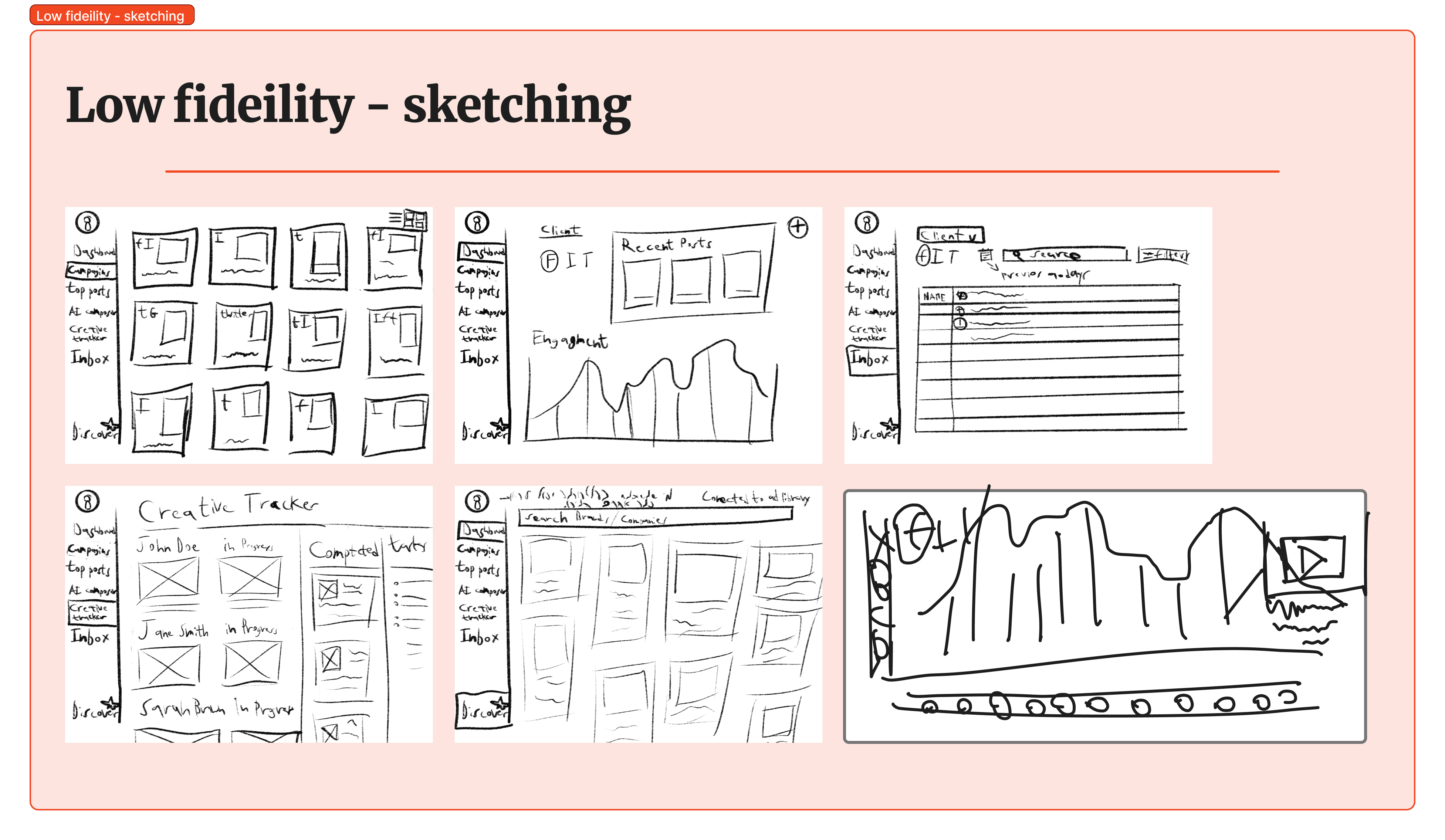
Cross-client filtering, post scheduling, AI tone controls and visual performance indicators.
Clearer grouping, stronger labels and less competition between detailed metrics and the next action.
The system needed to hold many accounts without feeling like another dense enterprise dashboard.
06 · Product principles
Lead with the small set of metrics that can change a decision, then let users inspect the detail.
Place the post, its performance and the related next action in the same workflow.
Use AI to reduce blank-page effort while leaving tone, judgment and approval with the team.
07 · The solution
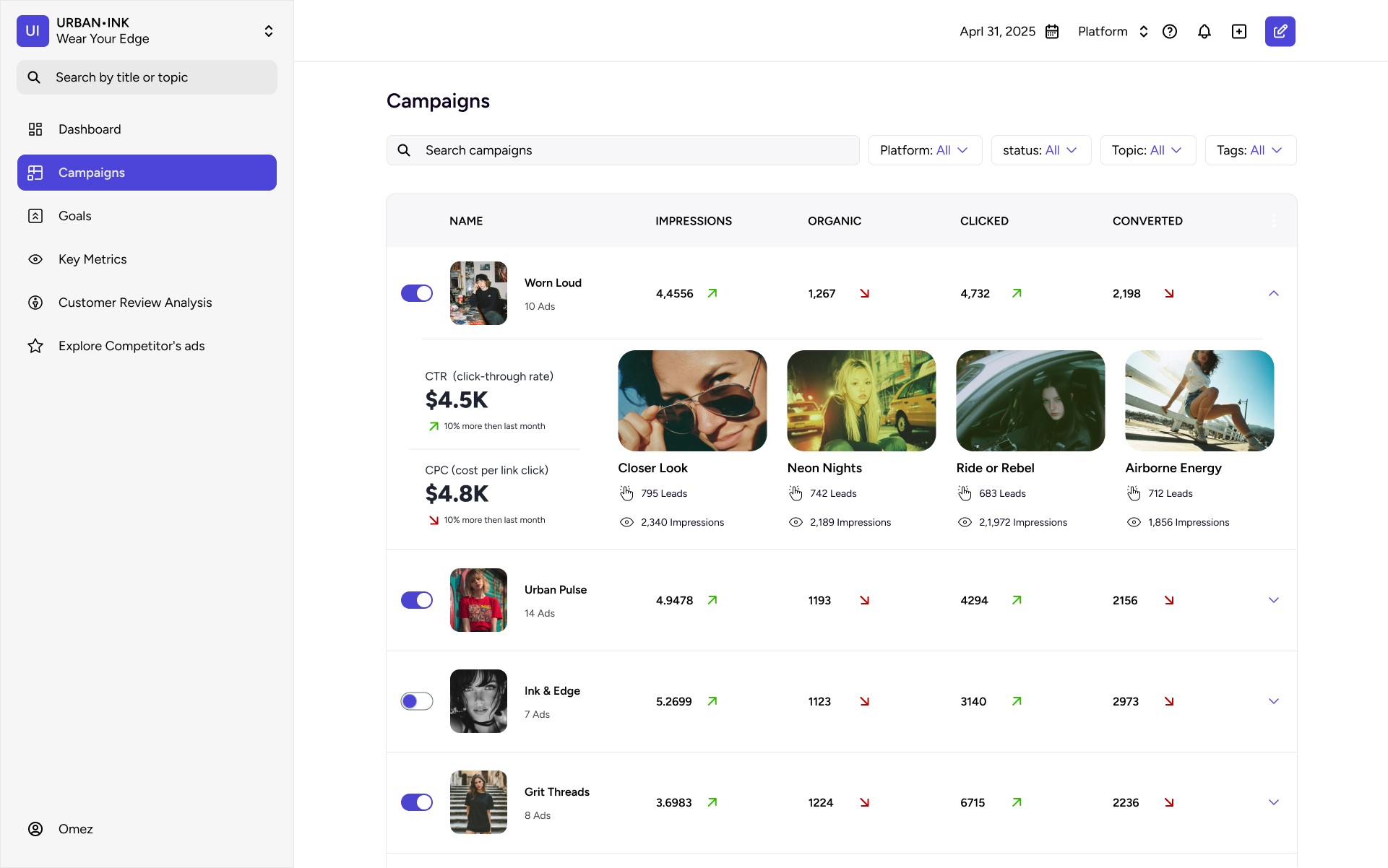
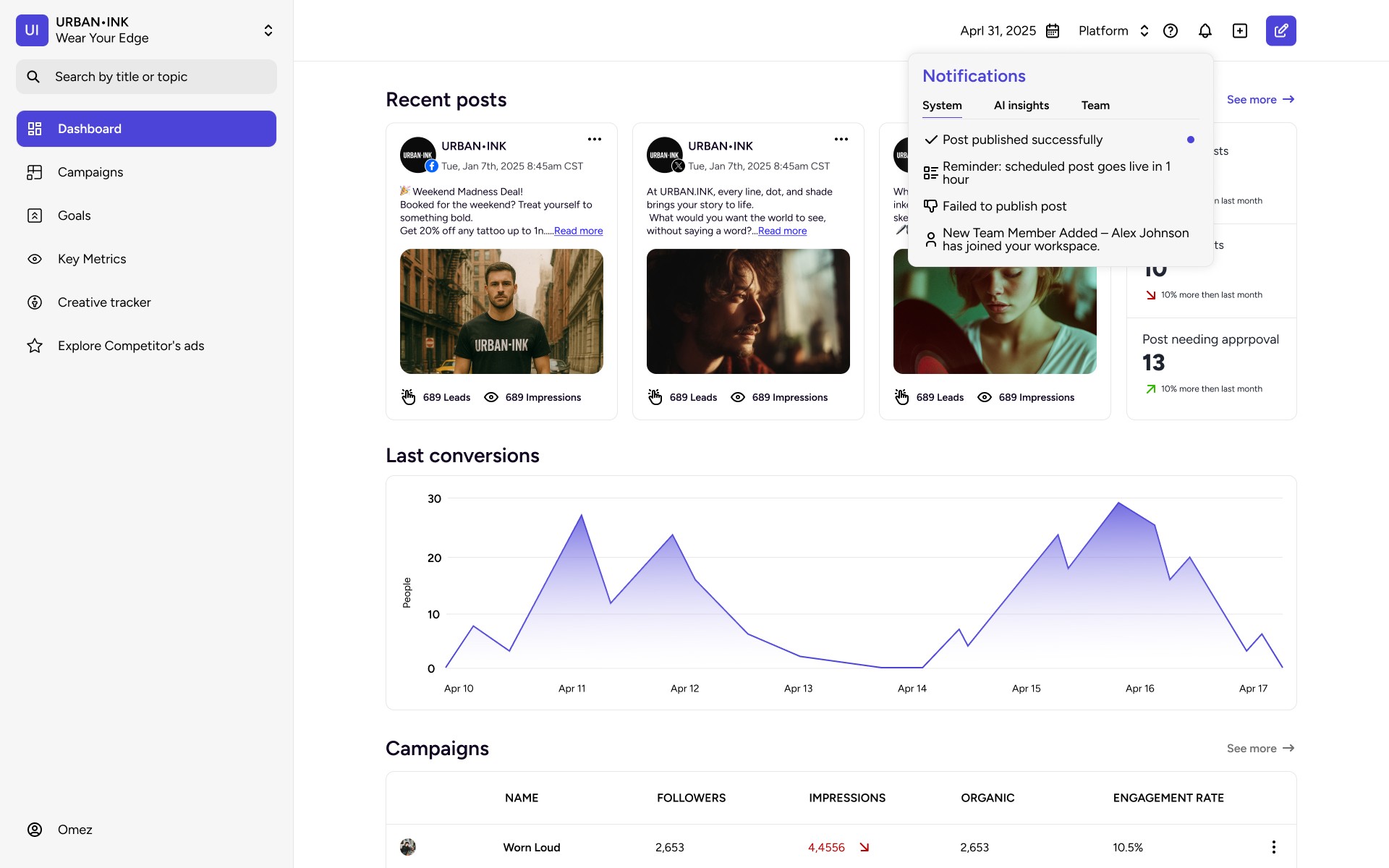
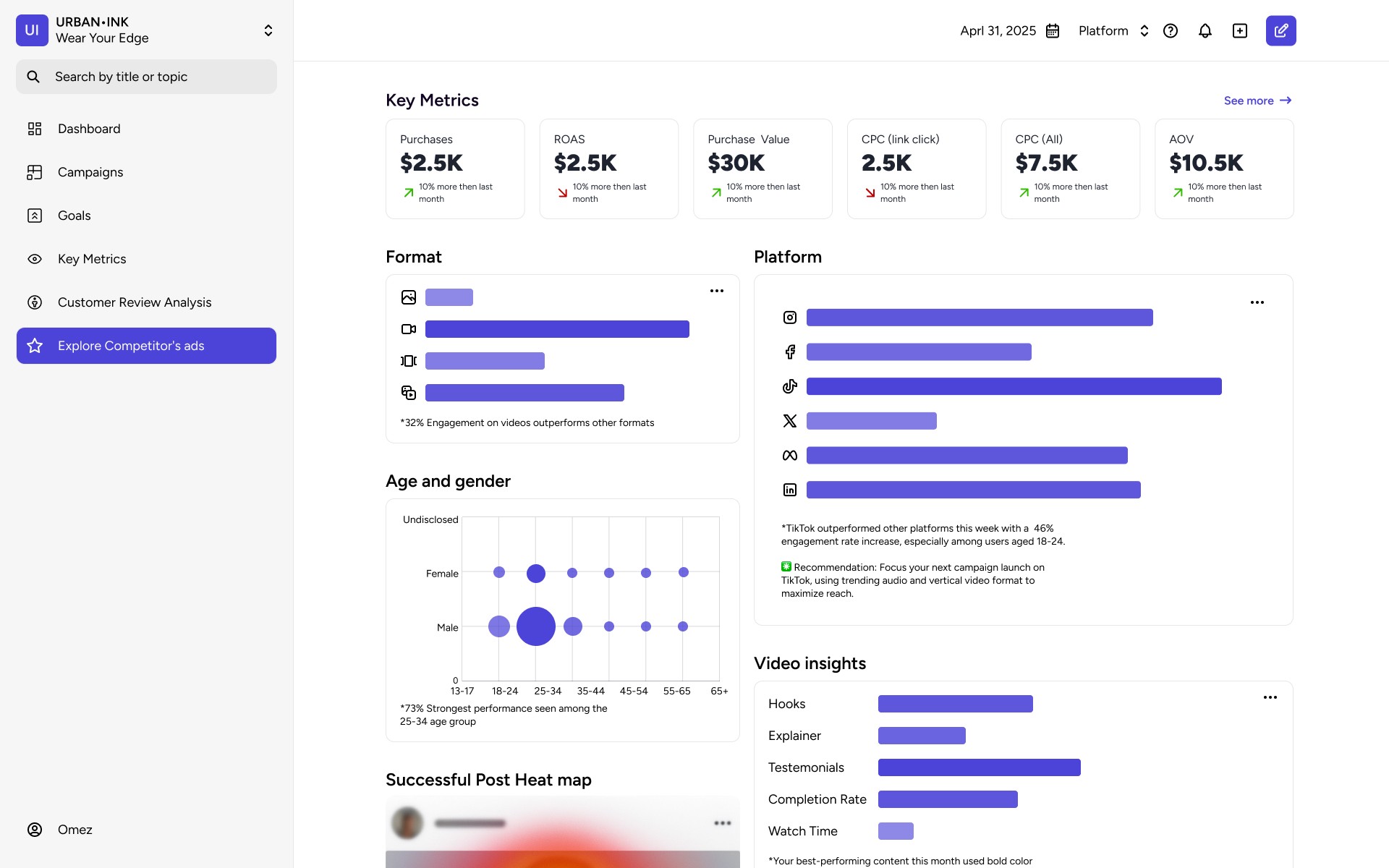
The dashboard brings active campaigns, priority metrics and recent content into one view, so teams can orient themselves without rebuilding the story.
Campaign planning stays connected to the signals behind the decision, reducing the jump between analytics and the content calendar.
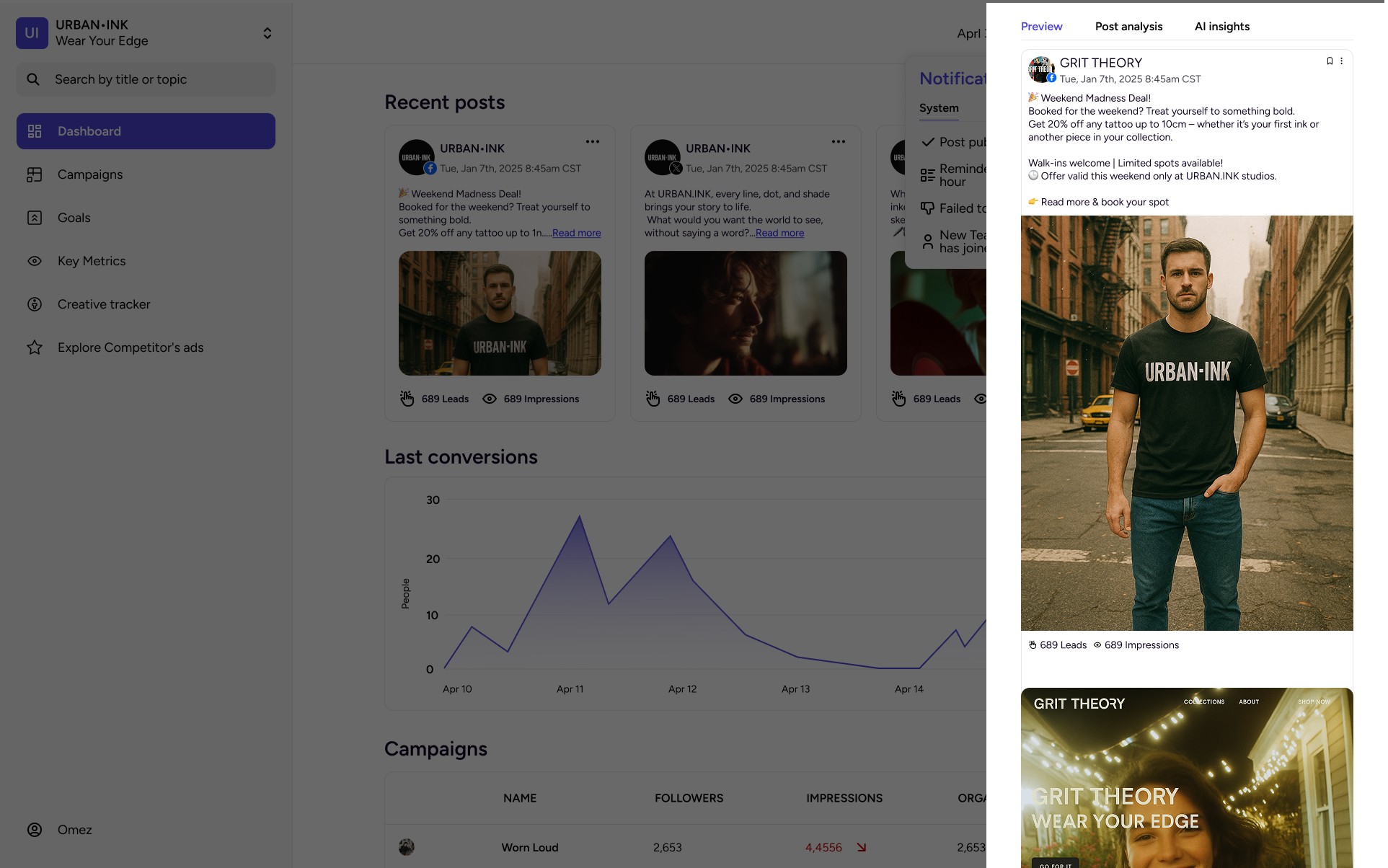
A dedicated preview keeps the post, its copy and its performance signals together, without squeezing the working canvas.
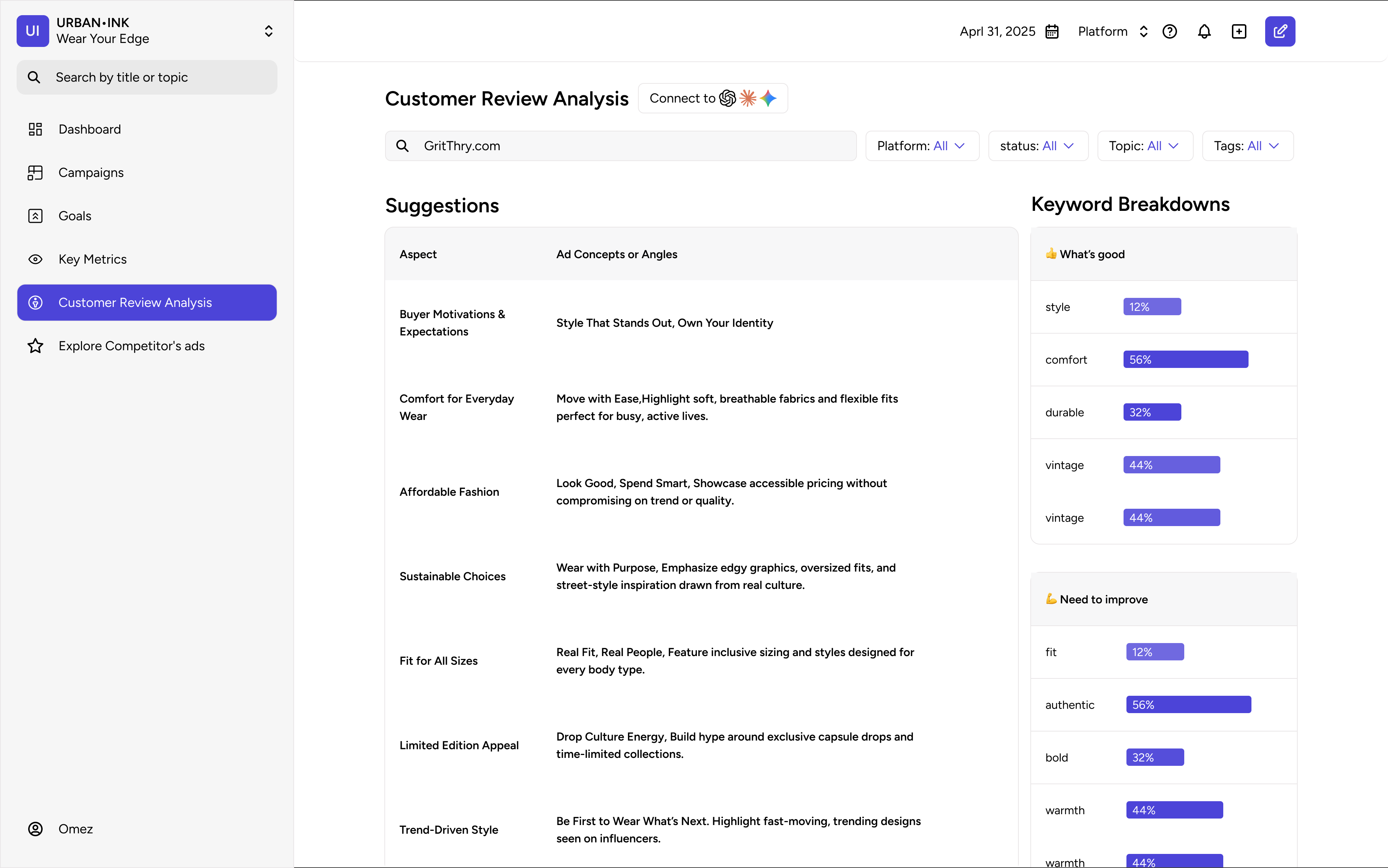
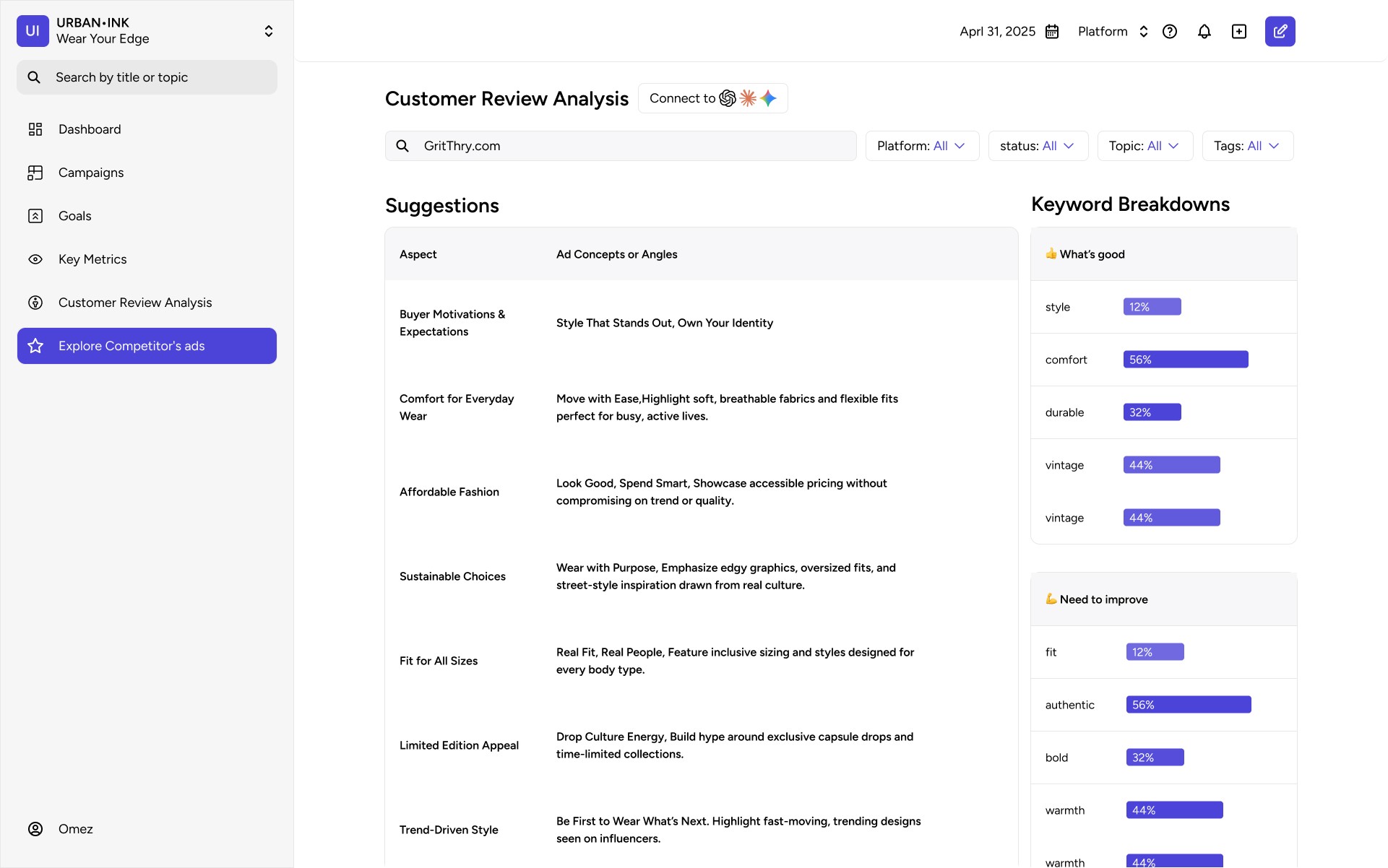
Review analysis turns recurring language into concrete creative suggestions, making the route from audience signal to content decision visible.
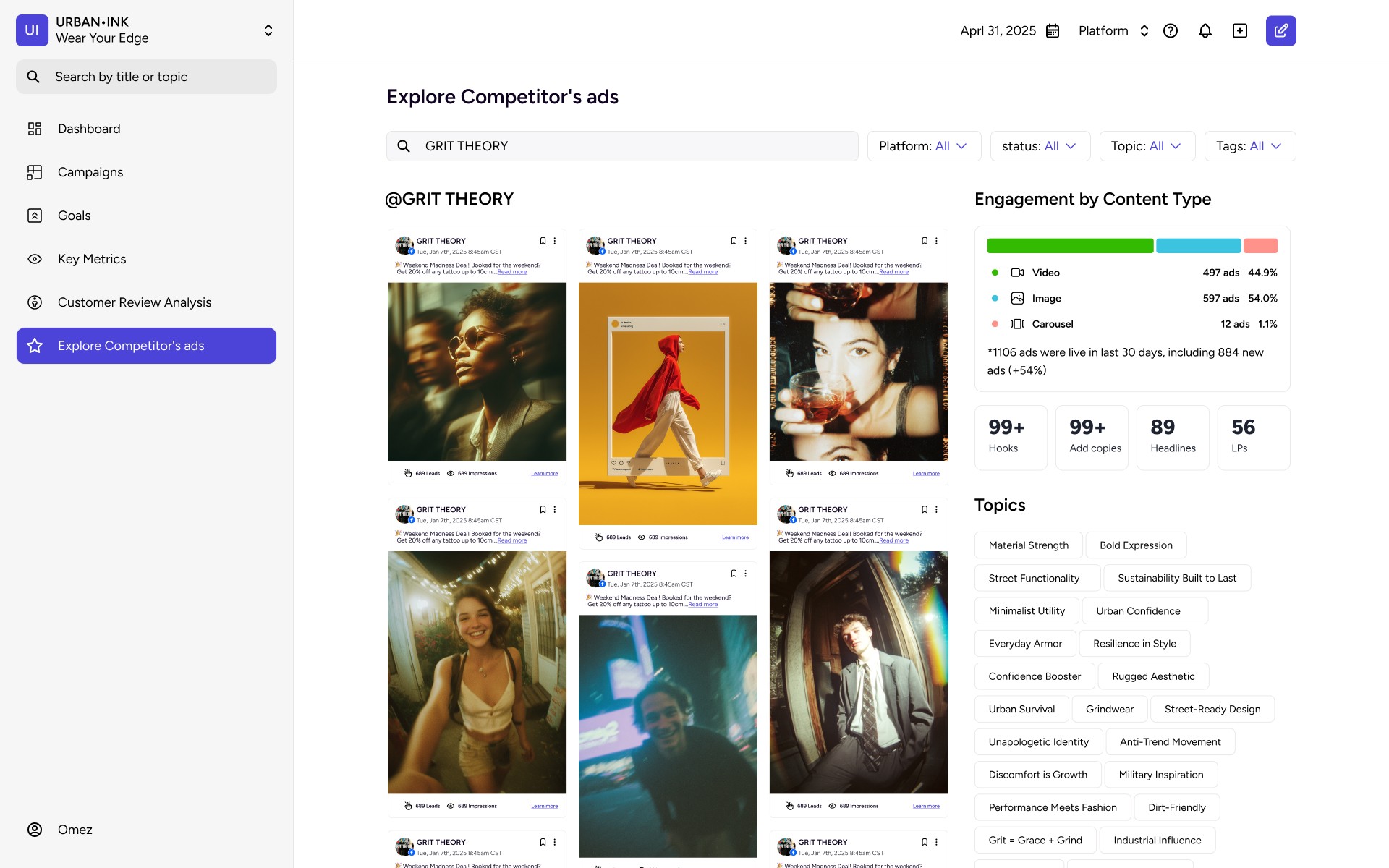
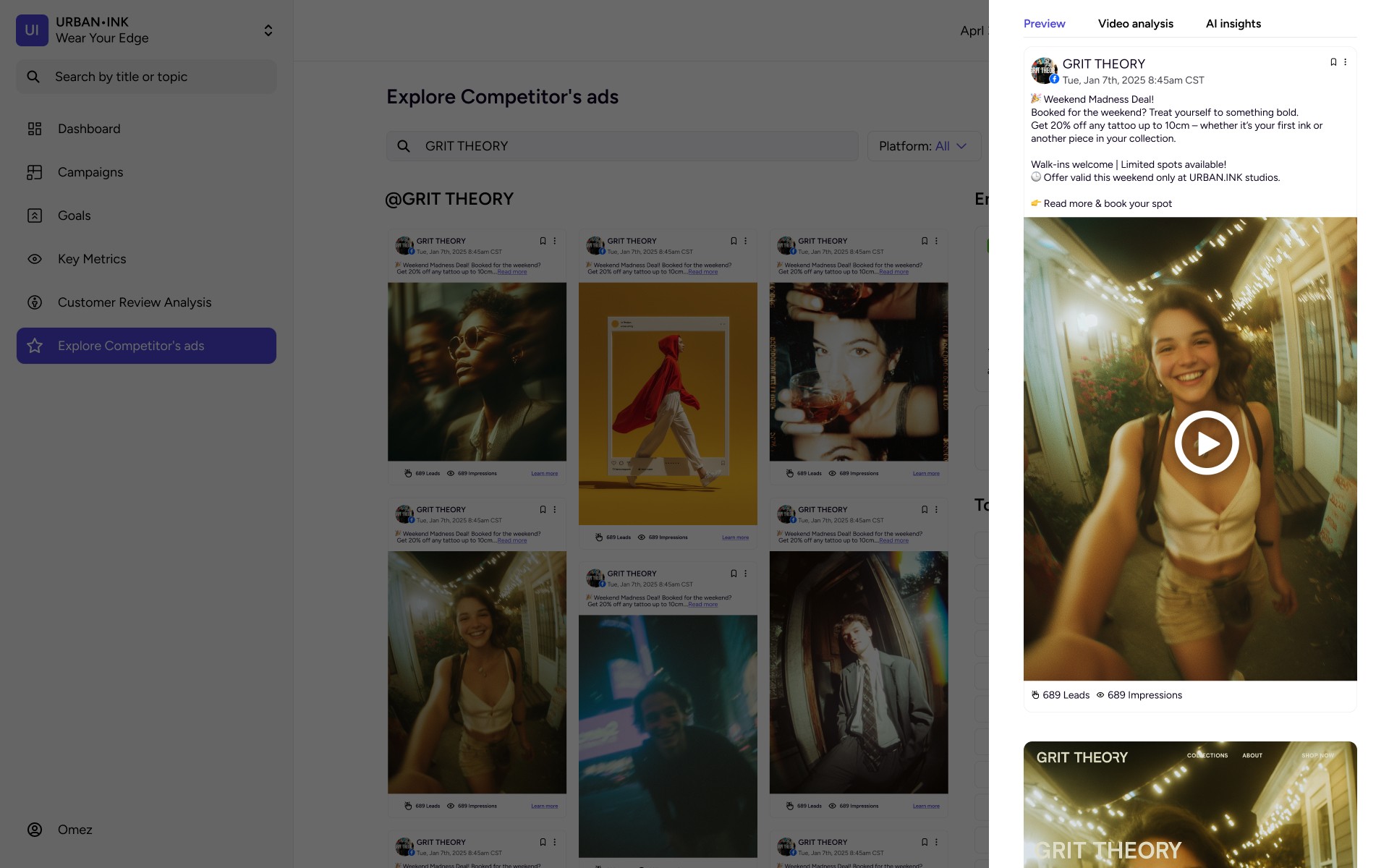
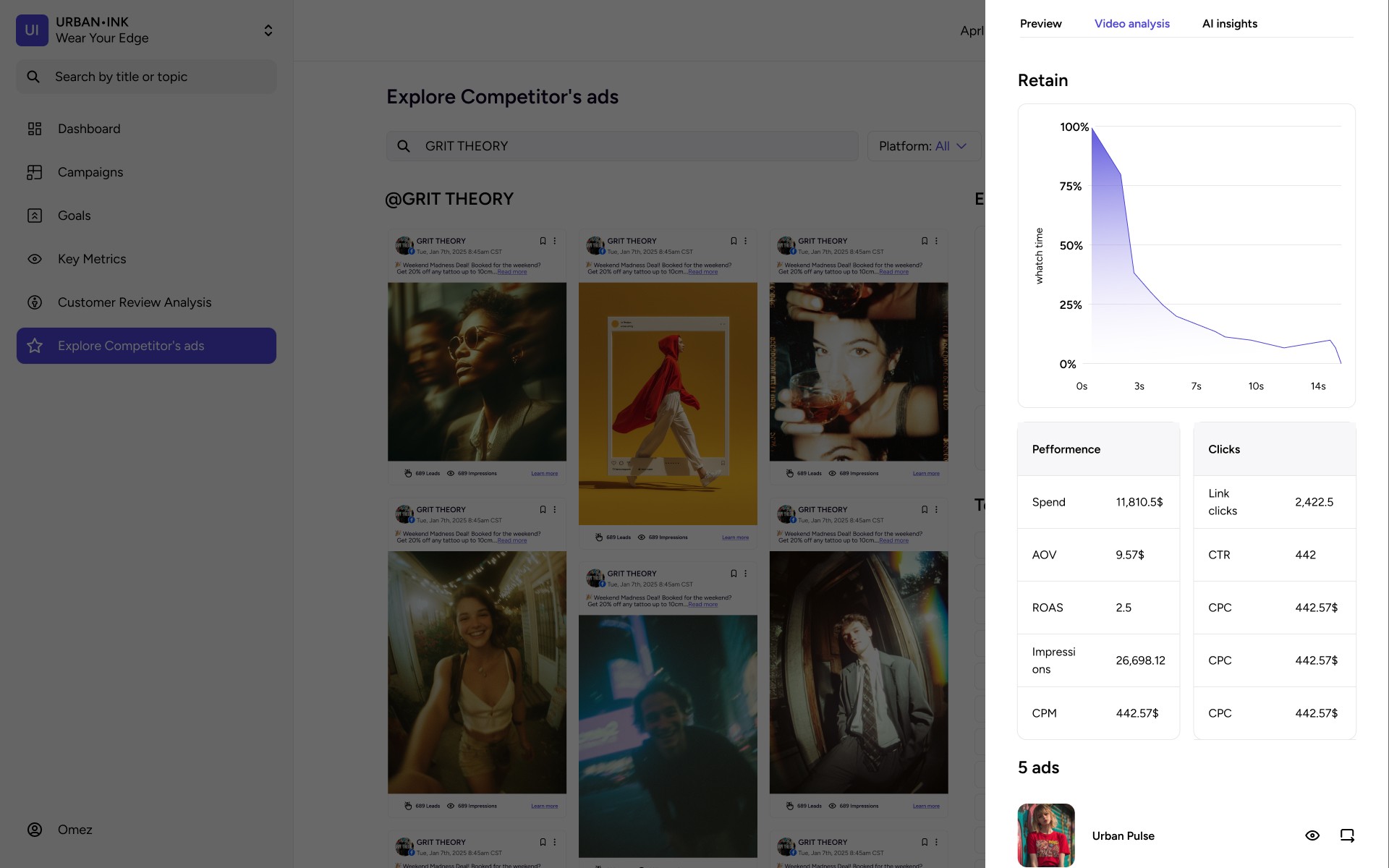
The competitive view stays alive as teams move through examples, compare patterns and return to the decision they need to make.
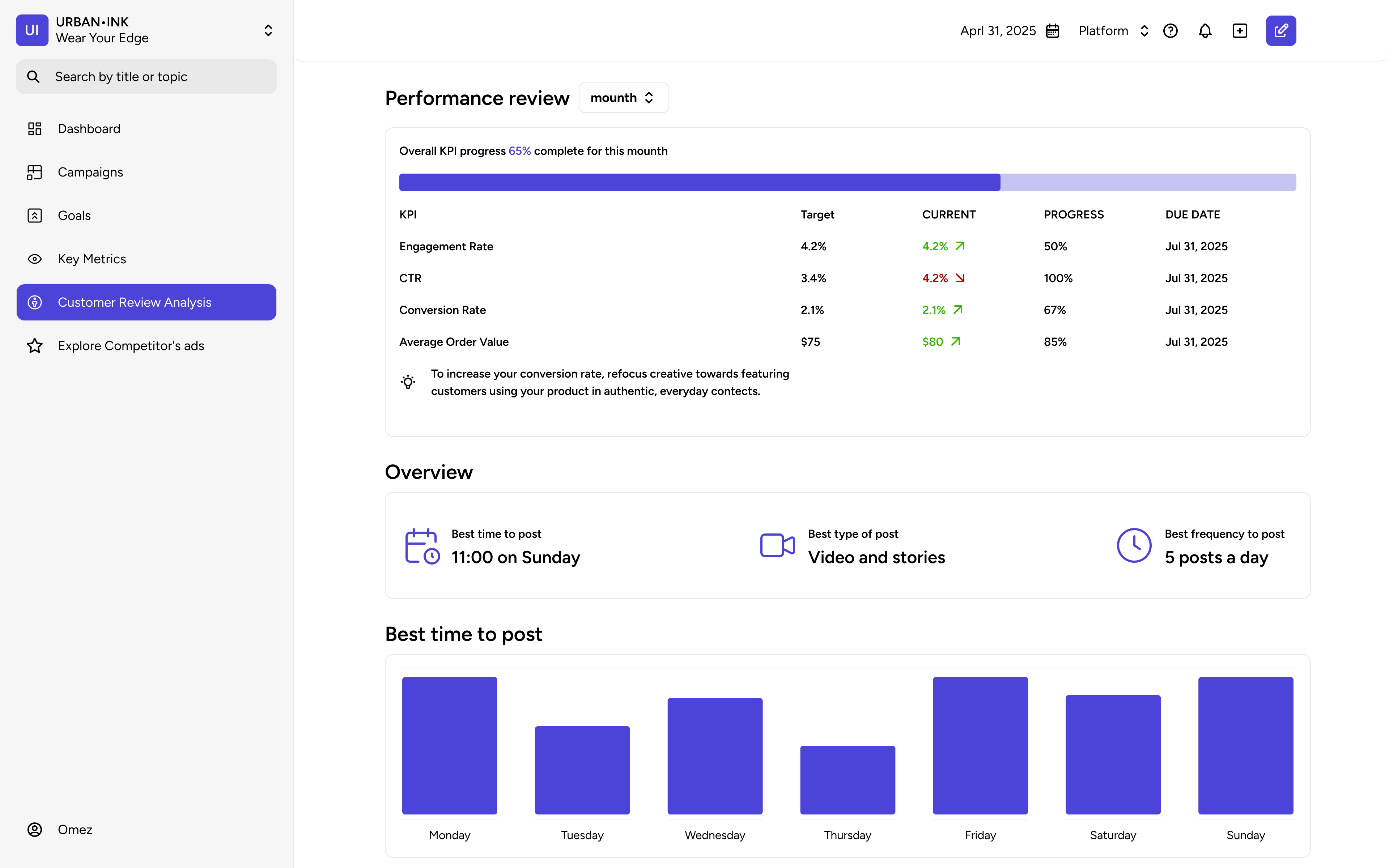
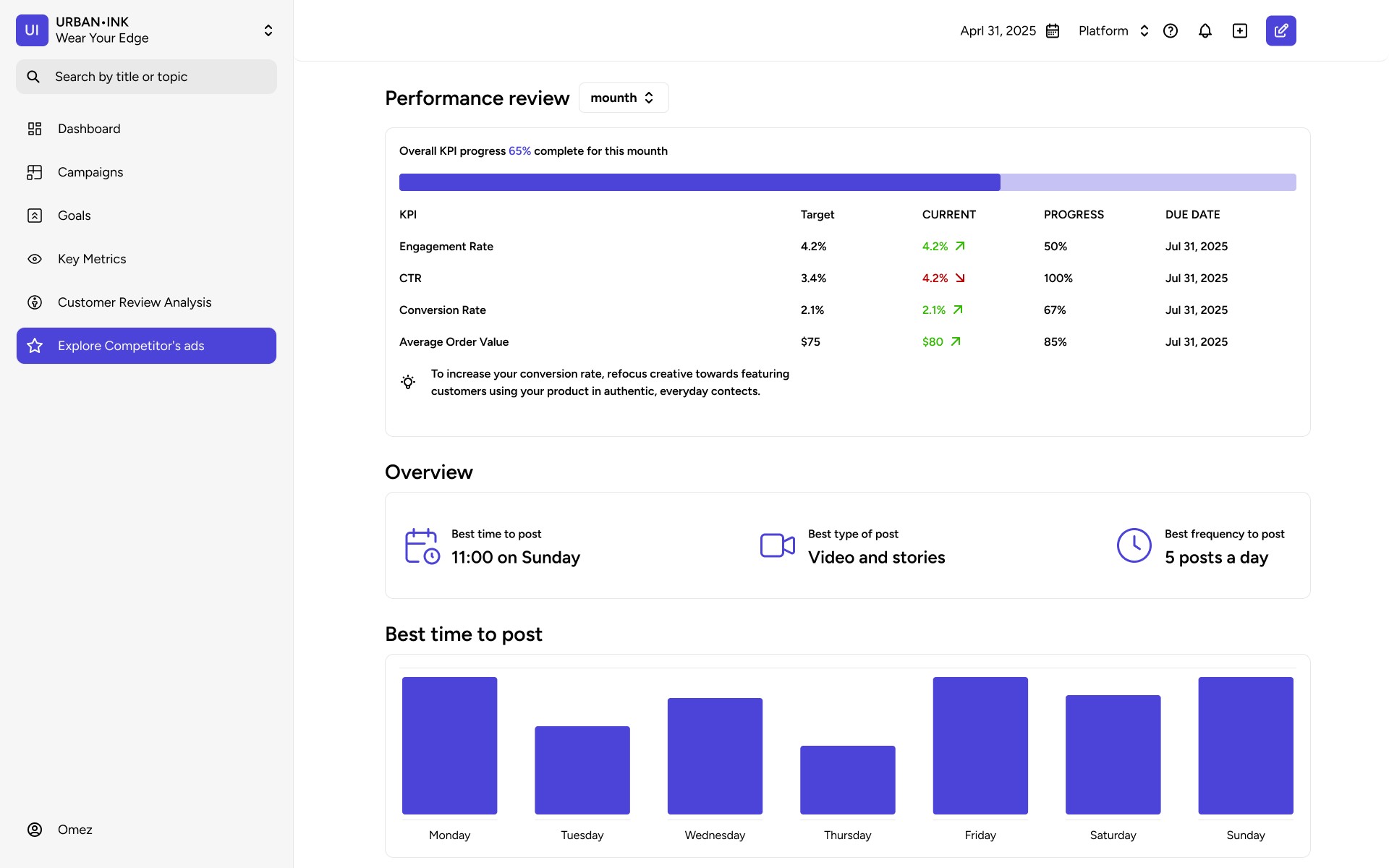
A monthly view brings KPIs, progress and recommendations into one place, helping teams optimize timing, formats and conversion strategy.
08 · How I would measure success
The strongest design decision was to treat performance review and content planning as one continuous activity.
That shift kept the experience focused on speed, clarity and impact while leaving space for human judgment.
Next case study